Showing posts with label Stew. Show all posts

Sunday, December 13, 2009

Luscious Louisiana

"There is no dish which at the same time so tickles the palate, satisfies the appetite, furnished the body with nutriment sufficient to carry on the physical requirements, and costs so little as a Creole Gumbo. It is a dinner in itself, being soup, piece de rĂ©sistance, entremet and vegetable in one.”

-William H. Coleman,
Historical Sketch Book and Guide to New Orleans and Environs


Gumbo originated in New Orleans, Louisiana and to me represents multiculturalism in a pot. It combines the flavours of Africa, Spain, Native America and France to produce a dish full of flavour, that owes its heritage to many people and many places. It is said that there are as many ways to cook Gumbo as there are cooks, so you will see many different versions. It is a thick soup/stew that contains rice (if there is no rice actually in it, it is always served with rice on the side) to this, broth and other ingredients are added. Some use pork, chicken, sausage and seafood, some use just vegetables. The Cajun folks tend to make a darker, heavier Gumbo that has a roux (flour and browned butter) as a base and does not use tomatoes. The Creole style uses tomatoes, and okra (which does the same job as the roux, binding the dish) The Native Americans use leaves from the Sassafrass tree to do the same.

My Gourmet Goddess version tonight borrows from the Creole tradition and uses purely seafood. I chose flathead fillets, clams, calamari and prawns. I also used chilli in the dish, which is not usually done - it is usually served seperately in the form of chilli sauce (like Tabasco) so people can add as little or as much as they like. I was just cooking for myself tonight, and I know what I like so I just put the chilli right in there! Feel free to use it or not.

Some notes about the ingredients....


Tabasco Smoked Chipotle Sauce - This particular Tabasco isn't that easy to find in Australia, although if you live in the city, the David Jones Foodhall does stock it in their "American" section. You can also buy it online. USA foods out of Melbourne is a good source if you live in Australia. http://www.usafoods.com.au/
 If you can't get it, don't worry - just use normal Tabasco from the supermarket. It will not the have the same slightly smoky undertaste, but it will still taste good.


Okra - If you are not familiar with this vegetable, it is a long green pod native to West Africa and is related to the Hibiscus plant. Although it originated in Africa, it spread with the slave trade and is now eaten all over the world, throughout Asia and the Middle East, America, Nepal and India. When you slice it, it releases a clear sap that helps to thicken any dish that contains it. The texture when cooked is pleasantly gelatinous and it soaks up flavours particularly well. I think that it is at its best in Gumbo.


So, to tonight's dish - this amount will serve 4 people and you can freeze it , but if you do be sure to remove the meat from the clams first and disgard the shells.


Gourmet Goddess Creole Gumbo

You will need: 1 large onion, 1 medium carrot, 1 stalk celery, 1 large potato, 1 tin diced/crushed tomatoes, a couple of handfuls of okra (chop them into three), 1 bay leaf, 1 tablespoon paprika, 4 cloves chopped garlic, 1/2 tablespoon sugar, 1 red chilli chopped finely, 2 white fish fillets chopped into chunky pieces (I used flathead this time), a couple of handfuls of clams in the shell, 6 shelled raw king prawns, 1 medium calamari/squid cut into rings, 1 litre fish or vegetable stock, 1 cup cooked white rice, Tabasco Sauce (the smoked chipotle version if you can get it, otherwise just use the normal one) salt and pepper, olive oil, fresh parsley to serve.

Method : Dice the onion, carrot, celery and potato into small cubes. Heat a splash of olive oil in a deep pan and add the chopped vegetables, along with the bay leaf, garlic and chilli. Cook on a medium heat until the onion starts to turn translucent. Add the okra and combine well. Let it cook for a couple of minutes, then add the tomatoes, tabasco, sugar and stock. Allow to simmer for 15minutes, then add the cooked rice. Simmer for another 5 minutes.

Add the seafood, combine well season with salt and pepper. Put the lid on the pan and let the seafood cook for about 5 minutes, stirring once during the cooking. The dish is ready when the clams open up (disgard any that do not) Taste the dish and adjust the seasoning if you need to.

Serve in soup bowls with fresh parsley.

*


Sunday, August 2, 2009

Mouthwatering Morocco

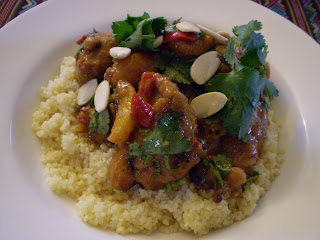
You might remember back in June I showed you how to make Moroccan Preserved Lemons. Well, I checked them this morning and they are ready to be used, so today's recipe includes this unique ingredient. I really enjoy Moroccan food for it's aromatic character, beautiful flavours and balanced use of sweetness and sourness. Today's dish has all of these things. It uses roasted spices, dried apricots, chilli and of course the lemony punch of the preserved lemons, to make a Chicken Tagine that can be a midweek dinner or a centerpiece for a full Moroccan style feast.
A Tagine gets its name from the conical earthenware pots used through North Africa to braise meat, grains and vegetables. The principle is that the meal is cooked slowly, and the moisture that collects in the lid runs back into the dish. This results in very tender meat and no loss of precious flavour. More recently, a Tagine has come to mean the dish itself - braised or stewed meat, vegetables and grains that may or may not actually be cooked in a Tagine. I just used a standard heavy based pot to cook my Tagine today.

Although my recipe includes chicken, you can easily adapt this to suit you. You can omit the meat altogether and add more vegetables (carrot, zucchini, eggplant for example) or you could use lamb or goat meat in place of the chicken. If you use lamb or goat, I would double the quoted cooking time. If you use vegetables alone, halve the cooking time. Also feel free to ramp up the chilli content if you like things spicy. I used both fresh chilli and Harissa (Moroccan chilli paste) in my dish. If you cannot buy Harissa where you are, substitute minced chilli or sambal olek. The flavour is different but it still works well. Serve the Tagine with couscous and warm flatbread to soak up all the delicious gravy. My recipe serves 4-6 and freezes extremely well if you want to save some for later.

A note about the preserved lemon - to prepare the presrved lemon, you need to remove all of the pulp and disgard it. You will only use the skin. With a sharp knife, cut off the pith close to the skin. Disgard this also. Wash the lemon skin well - it will be very salty. Then chop the lemon finely. Now it is ready to use.

Chicken Tagine


You will need: 1kg skinless chicken thighs cut into large chunks, 2 diced red onions, 1 diced red pepper, 3 cloves finely chopped garlic, 1/2 cup diced pumpkin, 1 tablespoon pitted black olives, 1 can chickpeas rinsed and drained, 1 large sliced red chilli, 2 teaspoons finely chopped preserved lemon, 300g halved dried apricots, olive oil, 1/2 cup plain flour, 1 tablespoon sweet paprika, 1-2 teaspoons Harissa (or minced chilli), 2 teaspoons honey, 1/2 teaspoon white peppercorns, 1/2 teaspoon black peppercorns, 1 teaspoon corainder seeds, 6 cloves, 1 stick cinnamon, 1 litre chicken stock (or vegetable stock), 1/2 cup toasted skinless almonds, 1 bunch fresh coriander roughly chopped, 1 tablespoon finely chopped mint.

Method: First, toast your spices. In a dry pan combine the cloves, coriander seeds and peppercorns and toast them gently until they start to release their fragrance. When they are done, crush them in a mortar and pestle or spice grinder. Next, splash some olive oil into a heavy based pot and cook the red onion, peppers, garlic and pumpkin until the onion starts to brown a little. Add the spice mixture, along with the olives, fresh chilli, cinnamon stick, preserved lemon, and Harissa. Cook for another minute or two. Remove from the heat and set aside.

In a plastic bag, combine the flour and paprika. Add the chicken and coat the pieces well in the flour mixture. Heat a frypan and add a generous splash of olive oil. Cook the chicken in batches until slightly golden on both sides.

Add the chicken, apricots,honey, chickpeas and stock to the spice/onion mixture. Combine and bring to the boil. Simmer gently uncovered (stirring occasionally) for about an hour. When ready to serve, taste for seasoning and stir through the fresh coriander and mint. Top with the toasted almonds.

*

Sunday, July 12, 2009

Slow Food Sunday

For a while I have been thinking about cooking oxtail and reading a bit about different ways to go about it. I have a memory of eating a stunning oxtail stew in a pub years ago, when I was spending a winter weekend up in the Blue Mountains. I was blown away by the flavour and richness of the dish and the soft, melting texture of the meat. I have noticed a shift in recent years, away from the more expensive cuts of meat towards cuts that you would previously never see on any restaurant menu - lamb shanks in particular come to mind. Butchers used to practically give these away for dog food, now we seek them out because we know that if we treat them right, they are delicious and full of flavour. Oxtail is no exception.

I have never cooked oxtail before, so after doing a bit of research on how other cooks handle it, I came up with my own recipe and crossed my fingers. Happily, this is one cooking experiment that went very, very right. The key to this cut of meat is to cook it for a very long time - most recipes I found recommended between 2-6 hours. I went with 5 hours for my version. As each hour went by and I gave the oxtail a stir and a taste, I became more and more excited by the flavour that was developing. This dish is really worth the slow cooking time because the end result is to die for. It just needs you to give it a little attention from time to time and to stir the pot well, so that the sauce does not catch too much on the bottom. I started the dish in the morning just after breakfast and kept it just barely simmering on the stove through to the mid afternoon. It was a particularly chilly winter day today, so I was all about comfort - the beautiful rich aroma coming from the kitchen and the fact that I didn't even get out of my pajama pants for the entire day made me feel very cosy indeed. :)

So, here it is - Slow cooked oxtail stew. Aromatic, flavoursome and with juicy meat that just falls off the bone. I served it with parsnip and potato mash and some broad beans. Delicious.


Slow Cooked Oxtail Stew


You will need: 1kg oxtail (get the butcher to cut it into pieces about 4 cm long), 2 tablespoons plain flour, 1 teaspoon paprika, pepper and salt, olive oil, 1 cup white wine, 1 litre good quality beef stock, 1 tin crushed tomatoes (I used italian ones), 3 chopped cloves garlic, 6 sliced eschallots, 1 large chopped brown onion, 1 cup each of finely diced carrot, celery,fennel, 2 tablespoons finely chopped parsley stalks.

Method: Combine the flour, paprika and salt and pepper in a plastic bag and add the oxtail. Coat the oxtail pieces well in the flour and dust off any excess. Heat a generous splash of olive oil in a heavy based dish (if you are lucky enough to own an extra heavy cast iron/enamel dish, this would be ideal.) Brown the oxtail a few pieces at a time and then set them aside. Be careful not to let the flour in the pan burn - brown is ok, but not black.

Splash a few tablespoons of the white wine into the pan to deglaze, and give it a stir to lift any brown bits from the bottom of the dish. Add an extra tablespoon of olive oil and add the onion, eschallots, celery, carrot, fennel, garlic and parsley stalks. Cook the vegetables for a few minutes until the onion starts to look transperent.

Add the oxtail and stir through the vegetable mixture. Next, add the remaining wine and let it bubble for about a minute, to cook off the alcohol and to allow the meat to soak up the flavour. Now, add the stock and tomatoes, a generous seasoning of pepper and give it another good mix.

Bring to a very gentle simmer - the bubbles should barely break the surface - and cook covered for 3 hours and then then take the lid off and continue uncovered for another 2 hours. Give the dish a stir from time to time and make sure that the sauce is not catching on the bottom.

Serve with mash or polenta and winter vegetables.

*